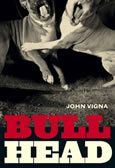
 Bull Head by John Vigna Bull Head by John Vigna
Available at Polar Peek Books and Treasures in downtown Fernie
– Reviewed by Angie Abdou for The Fernie Fix’s November 2012 Issue
Bull Head by John Vigna initially caught my attention when Steven Beattie, Review Editor at the Quill and Quire, said it was good. Steven Beattie doesn’t whole heartedly endorse many books. I take his praise very seriously.
Shortly afterwards, someone asked "Hey, isn’t that John Vigna Bull Head book about Fernie?" Surely not. I would know.
Wouldn’t I?
I dropped John a note – hey is your book about Fernie? His response came back: "Well, yes, it’s set in the Elk Valley, but it’s not exactly the Fernie that you know and love."
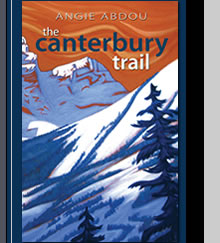
I replied that he must not have read my novel The Canterbury Trail (since I’m not above having a look at the dark side of this town that I do know and do love), and then I sat down with Bull Head.
Though Vigna doesn’t use the name "Fernie" anywhere in his short-story collection, the landmarks are unmistakable: The Old Elevator, the Ghostrider, the Northern, the Elk River, the Stop ‘n’ Shop, and the 3 & 93 Dairy Bar. These are our places, and the people are our people: coal miners, truckers, hunters, tree-planters, bar-tenders, ranchers, and realtors. There is a story called "South Country," and only readers of this precise area will know instantly and exactly where that title originates.
Robert Kroetsch once said that the purpose of Canadian literature is to cure us of our "Invisibility Complex." If we never see our experience reflected (in literature), how do we know we exist? In Bull Head, Vigna holds up a mirror to the Elk Valley, to be sure, but be warned: the reflection is not flattering. These are dark stories. Brutally dark. Tragically dark. Wake-you-up-in-the-night dark. They’re filled with substance addiction, sexual violence, physical abuse, and eviscerated animals. There are a lot of guns. The marriages are without love. There is at least one bear mauling (but what animals do to people is nothing compared to what people do to people). The only Kootenai woman in the collection has been exploited, abused, and diminished. An overwhelming and visceral sense of loss permeates the entire book.
Did I mention that Bull Head is dark?
The beauty in the collection comes in the descriptions of nature: the snow-dusted peaks of the Lizard Range, the near-by bugle call of the elk, the rich black soil. There is very little in the way of optimism. "Tomorrow," one story ends, "I was just wondering about tomorrow." And this is the only hope offered in Vigna’s stories: that there will be a tomorrow. What we choose to do with that tomorrow remains to be seen.
So, Bull Head is very dark (I said that already), but what I haven’t said is that the writing is stunning. Vigna’s precise and powerful prose holds the readers’ attention fully in the scene, even when that attention doesn’t want to be held. These stories grab tight and say: Look! LOOK because this happens, this is true. The reader’s gaze is forced into the most uncomfortable places. The best fiction does that – strips away artifice, refuses to allow room for denial, makes us see clearly what we’d rather not see at all. Bull Head left me gutted. I will be thinking about John Vigna’s vision and the effect it had on me for a very long time.
John Vigna is coming here on November 3rd at 8pm to discuss and read from Bull Head. Come see him at Clawhammer Press, 661 2nd Avenue. There will be refreshments and stimulating conversation. Let’s find out what moved John Vigna to set his stories in the Elk Valley. Let’s ask him what he aimed to achieve with such unrelenting darkness. And, most of all, let’s make him say something nice about Fernie. I’ll go first.
–
Angie Abdou is a local fiction writer. She teaches English Literature and Creative Writing at the College of the Rockies in Cranbrook. Find out more about her fiction and her upcoming speaking engagements here. |